Fire Prevention
Fire Prevention
SMOKE ALARMS AND DETECTORS
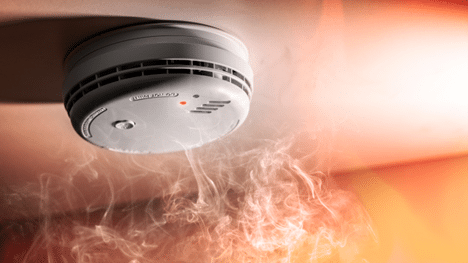
The New Hampshire Department of Safety released informational bulletins with regards to Smoke Alarm Device Requirements and Carbon Monoxide Detection Devices. You can view and download these bulletins below.
Smoke Alarm Device Requirements in Dwellings
Division of Fire Safety
Office of the State Fire Marshal
J. William Degnan, State Fire Marshall
Informational Bulletin 2015-01
Purpose
The purpose of the bulletin is to provide information as to the current requirements for smoke alarms in single-family dwellings as well as multi-unit dwellings and rental units.
Definitions
Automatic fire warning device – means a wall or ceiling mounted assembly containing an ionization chamber or photoelectric type of smoke detector, control equipment, and audible alarm in one unit which detects visible or invisible particles of combustion and which, upon detection of smoke, activates the alarm.
Building – means any structure, framework or housing, public or private, excluding single-family dwellings and multi-unit dwellings as defined, but including tanks, receptacles and containers for the storage of commodities or other materials.
Multi-unit Dwelling – means any structure not defined above as a building, which contains two or more single units which provide permanent or transient living facilities which may or may not include cooking and eating facilities, for one or more persons. This term shall include but not be limited to: rooming houses, dormitories, motels, hotels, apartment buildings, buildings which contain condominium units, duplexes, and houses; provided, however, that such buildings contain two or more units.
Rental Unit – means any residential unit in a building or single-family dwelling, which provides permanent or transient living facilities for one or more persons, which is occupied by tenants on a rental basis. This term shall include but not be limited to: hotels, motels, dormitories, apartments, duplex units, rooms rented out of the home of another, and single-family dwellings, so long as they are rented.
Single-Family Dwelling – means any structure not defined above as a building which contains one dwelling unit, which is designed to be occupied for living purposes, and which is used by one, two or more families exclusively as a home.
Substantially Rehabilitated – means any improvement to a building or single-family dwelling, which is valued at an amount greater than 1/2 of the assessed valuation of the building or dwelling. Please note this amount is based on the assessed value not the resale value. TDD Access: Relay NH 1-800-735-2964 ARSON HOTLINE 1-800-400-3526
1.) SINGLE-FAMILY DWELLINGS
When They Are Required
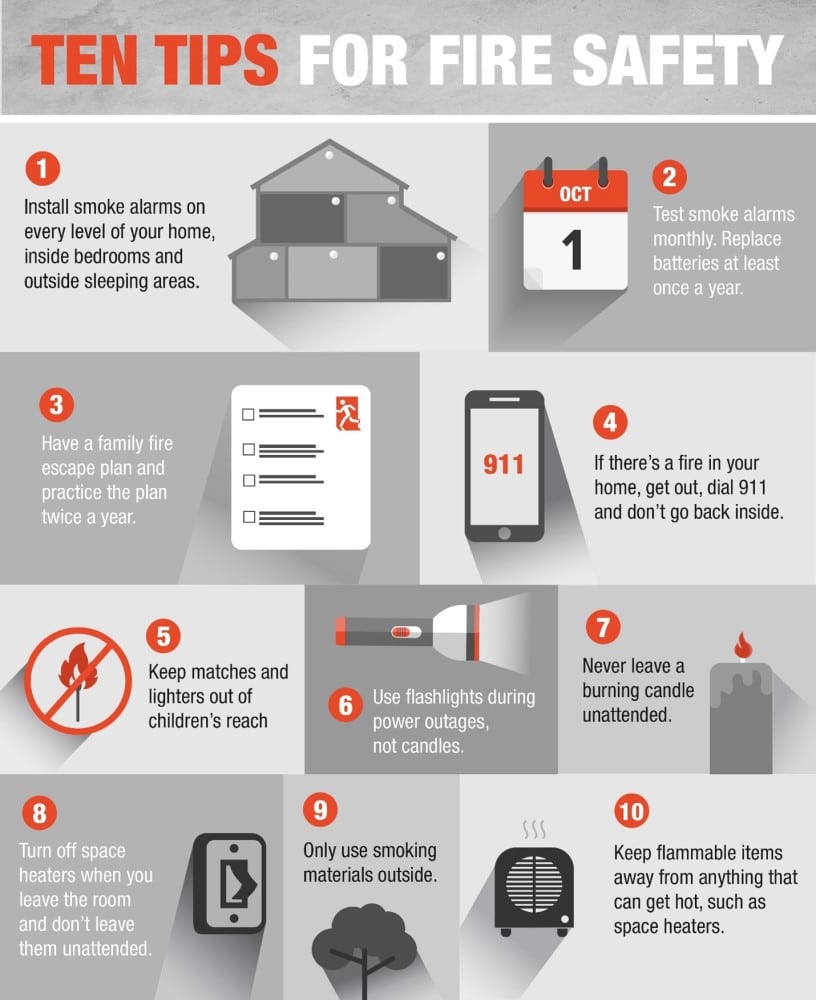
Smoke alarms shall be installed in all single-family dwellings. (1) (2)
Locations of Installation
Smoke alarms shall be installed in the following locations:
⦁ In each sleeping room.
⦁ Outside of each separate sleeping area in the immediate vicinity of the bedrooms.
⦁ On each additional story of the dwelling, including basements but not including crawl spaces and uninhabitable attics. In dwellings or dwelling units with split-levels and without an intervening door between the adjacent levels, a smoke alarm installed on the upper level shall suffice for the adjacent lower level provided that the lower level is less than one full story below the upper level. (1) (2)
Powering the Detectors
New Construction: Smoke alarms shall receive their primary power from the building’s wiring (hardwired) and when the primary power is interrupted shall receive power from a battery (battery backup). (1)
Existing with Alterations, Repairs and Additions: When there are alterations, repairs and additions requiring a permit or when one or more sleeping rooms are added, the individual dwelling unit shall be equipped with new smoke alarms located as required for new dwellings. (1)
*Exceptions to Existing with Alterations, Repairs and Additions*
⦁ Hardwiring of smoke alarms in existing areas shall not be required where the alterations or repairs do not result in the removal of interior wall or ceiling finishes exposing the structure, unless there is an attic, crawl space or basement available which could provide access for hard wiring without the removal of interior finishes. (1)
⦁ Work involving the exterior surface of the dwellings, such as the replacement of roofing or siding, or the addition or replacement of windows or doors, or the addition of a porch or deck. (1)
Existing: In existing single-family dwellings, approved smoke alarms powered by batteries shall be permitted. Please check with the local Authority Having Jurisdiction in reference to which smoke alarms and batteries are approved. (2)
2.) MULTI-UNIT DWELLINGS AND RENTAL UNITS
When They Are Required
Multi-unit dwellings and rental units shall be equipped with automatic fire warning devices. (3)
Locations of Installation
Smoke alarms shall be installed in the following locations:
⦁ On the ceiling or wall outside of each separate sleeping area in the immediate vicinity of the bedrooms.
⦁ In each room used for sleeping purposes.
⦁ In each story within a dwelling unit, including basements but not including crawl spaces and uninhabitable attics. In dwellings or dwelling units with split-levels and without an intervening door between the adjacent levels, a smoke alarm installed on the upper level shall suffice for the adjacent lower level provided that the lower level is less than one full story below the upper level. (4)
Powering the Detectors
New and Existing Construction: All automatic fire warning devices in multi-unit dwellings, and all rental units shall be powered by the house electrical service (hardwired.) (5)
Required Interconnection of the Detectors
New Construction and Existing Construction: When more than one smoke alarm is required to be installed within an individual dwelling unit or sleeping unit the smoke alarms shall be interconnected in such a manner that the activation of one alarm will activate all of the alarms in the individual unit. The alarm shall be clearly audible in all bedrooms with all intervening doors closed and also taking into account any ambient noise. Interconnection within the unit is required, not within the building. Wireless interconnection systems are permitted. (4) (6)
3.) GENERAL REQUIREMENTS (BOTH SINGLE-FAMILY AND MULTI-FAMILY DWELLINGS)
Combination Smoke/Carbon Monoxide Devices: (Single, Multi and Rentals)
Combination devices are permitted provided that they meet the requirements of UL 217 and UL2034. (1)
Interconnected and combination devices must be compatible with all of the other devices connected to that system/circuit. (5)
*Please note: Some combination devices utilize ionization type smoke detection. If photo-electric type detection is required then an ionization combination detector may not be code compliant.*
Maintenance of Devices Required: (Single-Family, Multi-Unit and Rentals)
The owner of the rental unit shall be responsible for maintaining the automatic fire warning device in a suitable condition. (3)
References:
(1) International Residential Code 2009 Edition, section R 314.
(2) NFPA 101 Life Safety Code 2009 Edition, Ch. 24.3.4.
(3) NH Fire Laws Annotated 153:10-a.
(4) International Building Code 2009 Edition, section 907.2.11.
(5) NH Administrative Rules, State Fire Code, Chapter Saf-C 6015.
(6) NFPA 1 Fire Code 2009 Edition, Ch. 13.7.1.4.9.
Carbon Monoxide Detection Devices in Dwellings
Division of Fire Safety
Office of the State Fire Marshal
J. William Degnan, State Fire Marshall
Informational Bulletin 2015-02
Purpose
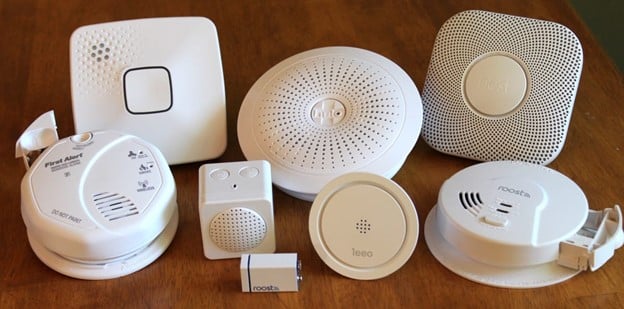
The purpose of this bulletin is to provide information as to the current requirements for Carbon Monoxide Detectors (CMD) in single-family dwellings as well as multi-unit dwellings and rental units.
Definitions
Building – means any structure, framework or housing, public or private, excluding single-family dwellings and multi-unit dwellings as defined, but including tanks, receptacles and containers for the storage of commodities or other materials.
Carbon Monoxide Detector – An alarm intended for the purpose of detecting carbon monoxide gas and alerting occupants by a distinct audible signal comprising an assembly that incorporates a sensor, control components, and an alarm notification appliance in a single unit operated from a power source either located in the unit or obtained at the point of installation.
Multi-Unit Dwelling – means any structure not defined above as building, which contains two or more single units, which provide permanent or transient living facilities, which may or may not include cooking and eating facilities, for one or more persons. This term shall include but not be limited to: rooming houses, dormitories, motels, hotels, apartment buildings, buildings which contain condominium units, duplexes, and houses; provided, however, that such buildings contain two or more units.
Rental Unit – means any residential unit in a building or single-family dwelling, which provides permanent or transient living facilities for one or more persons, which is occupied by tenants on a rental basis. This term shall include but not be limited to: hotels, motels, dormitories, apartments, duplex units, rooms rented out of the home of another, and single family dwellings, so long as they are rented.
Single-Family Dwelling – means any structure not defined above as building, which contains one dwelling unit, which is designed to be occupied for living purposes, and which is used by one, two or more families exclusively as a home.
Substantially Rehabilitated – means any improvement to a building or single-family dwelling, which is valued at an amount greater than 1/2 of the assessed valuation of the building or dwelling. Please note this amount is based on the assessed value not the resale value.
1.) SINGLE-FAMILY DWELLINGS
When They Are Required
Every single-family dwelling, which is built or substantially rehabilitated after January 1, 2010, shall be, equipped with carbon monoxide detection devices. (1)
*Exception*
A carbon monoxide detection device shall not be required if the single-family dwelling does not have an attached garage and does not contain an appliance or device that uses a combustion method of burning solid, liquid, or gas fuel. If a garage or combustion fuel appliance or device is later added to the dwelling, carbon monoxide detection devices shall be required. (1)
Locations of Installation
Carbon monoxide alarms or detectors shall be installed as follows:
⦁ Outside each separate dwelling unit sleeping area in the immediate vicinity of the bedrooms.
⦁ On every occupiable level of a dwelling unit, including basements, excluding attics and crawl spaces.
⦁ Each individual dwelling unit contained in a multi-unit dwelling shall be equipped with a carbon monoxide alarm or detector as required above. (2)
Each detector shall be located on the wall, ceiling, or other location as specified in the manufacturer’s published instructions that accompany the unit. (3)
Powering the Detectors
New Construction: Carbon monoxide alarms shall receive their primary power from the building wiring where such wiring is served from a commercial power source, and, where primary power is interrupted, shall receive power from a battery. Wiring shall be permanent and without a disconnecting switch other than those required for overcurrent protection. (7)
*Exception*
⦁ Carbon monoxide alarms shall be permitted to be battery operated where installed in buildings without commercial power. (7)
Existing Construction: At this time, carbon monoxide detectors are not required to be hardwired. (5)
2.) MULTI-UNIT DWELLINGS AND RENTAL UNITS
When They Are Required
Each multi-unit dwelling and rental unit shall be equipped with carbon monoxide detection devices. (1)
Locations of Installation
Carbon monoxide alarms or detectors shall be installed as follows:
⦁ Outside each separate dwelling unit sleeping area in the immediate vicinity of the bedrooms.
⦁ On every occupiable level of a dwelling unit, including basements, excluding attics and crawl spaces.
⦁ Each individual dwelling unit contained in a multi-unit dwelling shall be equipped with a carbon monoxide alarm or detector as required above. (2)
Each detector shall be located on the wall, ceiling, or other location as specified in the manufacturer’s published instructions that accompany the unit. (3)
Powering the Detectors
New Construction: Carbon monoxide alarms shall receive their primary power from the building wiring where such wiring is served from a commercial power source, and, where primary power is interrupted, shall receive power from a battery. Wiring shall be permanent and without a disconnecting switch other than those required for overcurrent protection. (6)
*Exception*
Where installed in buildings without commercial power, battery-powered carbon monoxide alarms shall be an acceptable alternative. (6)
Existing Construction: At least two independent and reliable power supplies shall be provided, one primary and one secondary; each of which shall be of adequate capacity for the application. At this time, carbon monoxide detectors are not required to be hardwired. (4)
Detectors may be connected to, and powered by, a commercial fire alarm system within a building. Detectors connected to commercial fire alarm systems shall be installed in accordance with the requirements of NFPA 72 and NFPA 720. (1)
3.) GENERAL REQUIREMENTS (BOTH SINGLE-FAMILY AND MULTI-FAMILY DWELLINGS)
Combination Smoke/Carbon Monoxide Devices: (Single, Multi and Rentals)
Combination devices are permitted provided that they meet the requirements of UL 217 and UL2034. (6)
Maintenance of Devices Required: (Single-Family, Multi-Unit and Rentals)
(a) The owner of a single-family dwelling, multi-unit dwelling and/or rental unit shall be responsible for maintaining all carbon monoxide alarms or detectors in good working order. (1)
(b) No person, tenant or occupant of a multi-unit dwelling and/or rental unit shall remove any battery from a carbon monoxide alarm or detector, disconnect the primary power to a carbon monoxide alarm or detector, or tamper with or otherwise render inoperable any carbon monoxide alarm or detector. (2)
References
(1) NH Fire Laws Annotated 153:10-a
(2) NH Administrative Rules, State Fire Code, Chapter Saf-C-6015
(3) NFPA 720 2009 Edition, Ch. 9.4.1.2
(4) NFPA 720 2009 Edition, Ch. 4.4.1.3.1
(5) International Residential Code 2009 Edition, section 315.1
(6) *International Building Code 2015 Edition, section 915.4 in anticipation of adoption, not currently adopted*
(7) *International Residential Code 2015 Edition, section 315.1 in anticipation of adoption, not currently adopted*